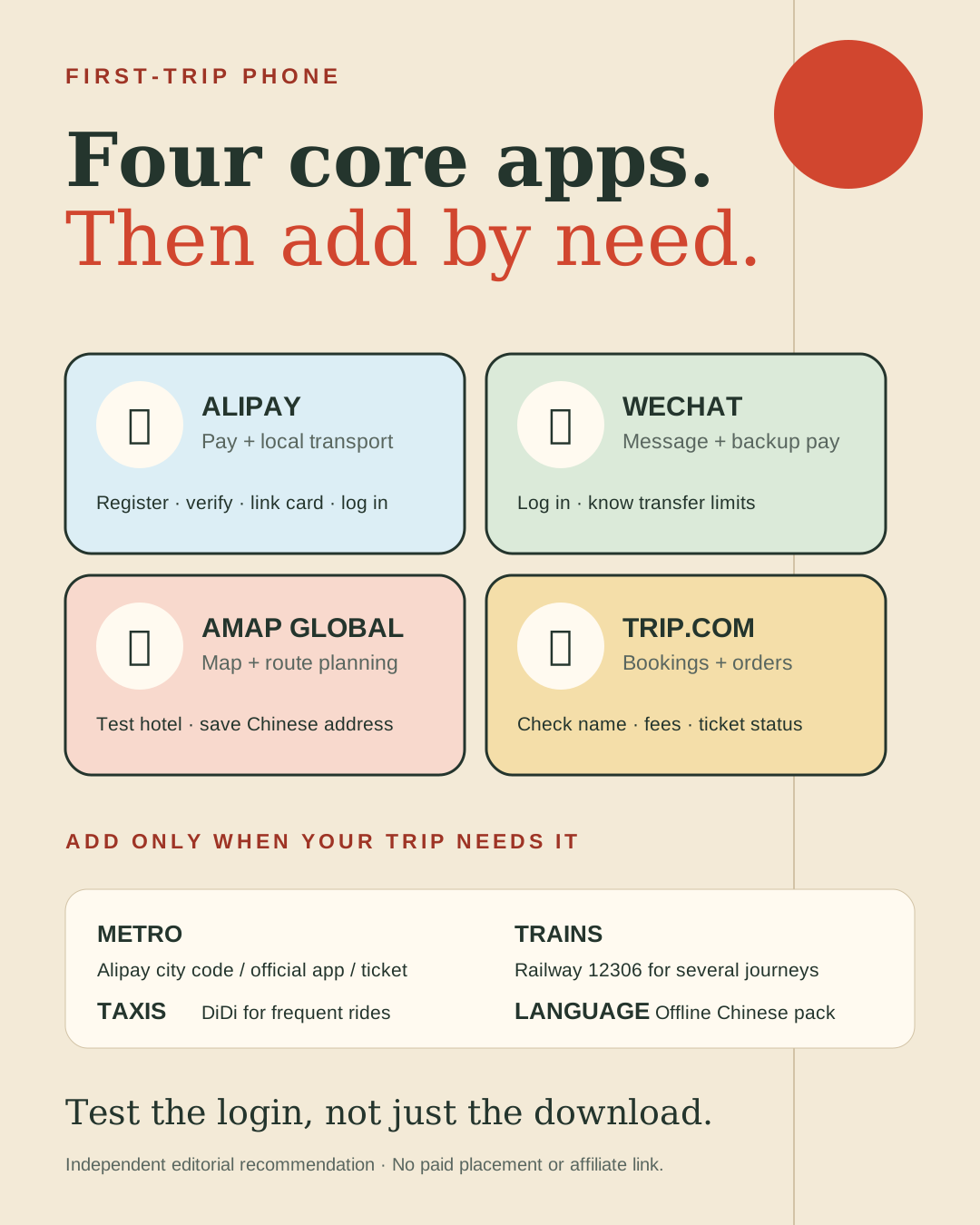
Do not fill your phone with unfamiliar apps. Start with four:
- Alipay for merchant payments and many local transport services.
- WeChat for messages, a second merchant-payment route, and service accounts.
- AMap Global for English maps and public transport directions.
- Trip.com as a practical international booking hub, though it is replaceable.
Then add Railway 12306, DiDi Greater China, a city metro app, or an offline translator only when your itinerary needs them.
1. Alipay: set up payment first
Alipay is the first app to prepare because it handles merchant payments and, in many cities, public-transport codes and ride-hailing entry points.
Before departure, register with a number that can receive SMS, enter your identity exactly as shown on your passport, link an international card, and confirm that you can log in. Keep a card from another bank and some cash as backups.
Menus and mini programs vary by city, language, account, and app version. A button shown in an old tutorial may not appear in the same place for you.
Bottom line: Make Alipay your main travel wallet, not your only payment route.
2. WeChat: communication plus a backup wallet
Hotels, guides, and local contacts often use WeChat. It can also open service accounts and mini programs and provide a second merchant-payment route.
Personal QR transfers, friend transfers, red packets, or informal deposits may not work with an international card. For a deposit, prefer a formal booking platform, merchant link, or another traceable official method.
Bottom line: WeChat solves communication and some service needs; a working chat account does not guarantee every transfer feature.
3. AMap Global: use a map built for local addresses
AMap’s English service is useful for roads, walking, metro, buses, and places in mainland China. Before departure, switch to English, search for your first hotel and arrival airport or station, and save the hotel’s Chinese name and address.
Some venue names and live notices may remain in Chinese. If an English search fails, paste the Chinese place name. Apple Maps can be a second map on iPhone, but do not make Google Maps your only navigation plan for mainland China.
Bottom line: The best travel map is the one that recognizes the local address and current transport network.
4. Metro: planning and gate entry are separate jobs
Use AMap to plan the route, transfer, exit, and walk. Use Alipay’s local transport code, an official city metro app, or a ticket to enter and exit.
In Alipay, open Transport, switch to the current city, and follow the on-screen setup for that city’s bus or metro code. Rules, identity checks, funding methods, and covered lines differ by city. A code opened in Shanghai is not proof that the same setup works everywhere.
If your phone or code fails, buy a single ticket or local transport card, or use a bank card only where the system explicitly supports it. Beijing supports some direct foreign Visa and Mastercard use on parts of its rail network, but that is not a nationwide rule. Each traveler should have their own valid ticket, card, or code.
Bottom line: AMap finds the metro; Alipay, a local official app, or a physical ticket gets you through the gate.
5. Trip.com: a strong default, not the only choice
Trip.com offers multiple languages, international-card-friendly access to Chinese travel inventory, and one place for hotels, flights, trains, and some airport transfers. China’s 2025 English guide lists it as a channel international visitors can use for hotels and airport transfers. That is practical guidance, not a government commercial endorsement.
We recommend it because it reduces friction for many first-time visitors. This is not a paid recommendation or affiliate placement.
Before booking, check:
- the passport name
- whether the hotel can register international guests
- room, breakfast, fee, and cancellation terms
- whether a train ticket is issued or still pending
- platform service fees and refund rules
Hotel and airline websites, official Railway 12306, Booking.com, Agoda, and Expedia can also work. Compare the actual listing, passport acceptance, issuance, fees, and cancellation terms rather than assuming one brand is always cheapest.
6. Add Railway 12306 for a train-heavy trip
Railway 12306 is China’s official train-ticket platform. International visitors can register with a passport and use the English site or app for supported booking, change, and refund functions.
It becomes more useful when you have several train journeys or want direct access to official availability. For one or two trips, a multilingual booking platform may feel easier, but check fees, ticket status, and change rules. Always carry the original passport used for the booking.
7. Add DiDi if you will ride often
DiDi Greater China supports registration with an overseas number and international card. Its dedicated interface makes ride details easier to manage.
Before getting in, check the pickup pin, Chinese destination, plate, and vehicle. Occasional riders can first use a ride-hailing entry point inside Alipay or WeChat; availability depends on the current account and app version.
8. Choose a translator that works offline
Use a translator you already understand and download its Chinese offline pack. Test text, camera, and voice modes before departure. Save your hotel address, dietary restriction, emergency contact, and common destination names in Chinese.
Offline ability matters more than brand. Cloud features can change with your roaming, eSIM, local SIM, or Wi-Fi route.
Your 10-minute app check
- Open and log in to the four core apps.
- Keep your registration number able to receive SMS.
- Test Alipay and WeChat setup.
- Search for your first hotel in AMap.
- Confirm how you will enter the metro in your first city.
- Screenshot hotel addresses and major bookings.
- Download a Chinese offline language pack.
- Install only from an official app store or product website.
Final answer: Set up Alipay, WeChat, AMap Global, and Trip.com first. Trip.com can be replaced by another reliable booking channel. Add Railway 12306 for several train trips, DiDi for frequent rides, and a translator with offline Chinese. A tested login is worth more than ten unused downloads.
Continue reading
- Your First Trip to China: The 72-Hour Checklist
- How to Get Mobile Data in China
- How to Buy and Ride a High-Speed Train in China
- How to Set Up Alipay and WeChat Pay as a Foreign Visitor
- Payment Not Working in China? Fix It at the Checkout First
Sources checked for this update
- Chinese government / Xinhua, Payment service guide for overseas visitors to China, April 11, 2024; rechecked September 10, 2026
- Alipay+, Pay in the Chinese mainland, rechecked September 10, 2026
- Tencent, Tencent Announces Three Initiatives to Make Inbound Payments for International Visitors Easier Than Ever During APEC 2026, updated June 5, 2026; rechecked September 10, 2026
- China Railway, 12306 English booking site and travel guide, including passport-document, booking, change, and refund guidance; rechecked September 10, 2026
- AutoNavi, AMap Global official Google Play listing, including current English travel, route, transit, and bilingual-help features; rechecked September 10, 2026
- Trip.com and DiDi Global official product sites, rechecked September 10, 2026