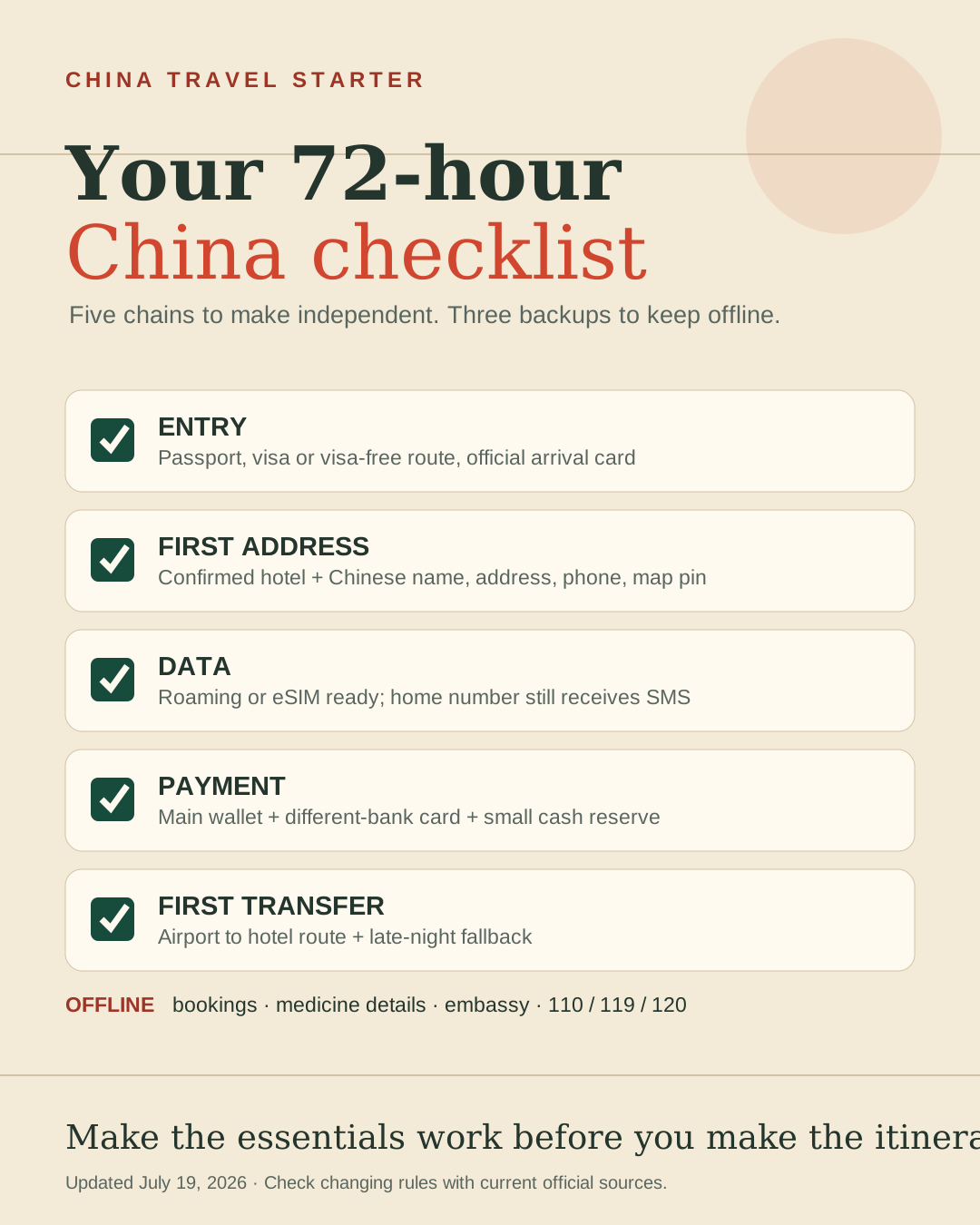
You do not need to memorize every China travel rule. Before boarding, make sure five things work:
- You can legally enter.
- You have a confirmed first-night address.
- Your phone will have data after landing.
- You have at least two ways to pay.
- Your passport details, bookings, and emergency contacts are available offline.
1. Confirm that you can enter
- Check that your passport is valid for your route and entry policy.
- Check the name, passport number, entries, and validity on your visa, if you need one.
- If you use visa-free entry, verify your nationality, purpose, permitted stay, and travel date.
- If you use transit without a visa, verify the arrival port, permitted area, onward ticket, and complete route.
Use the current page from China’s National Immigration Administration, a Chinese embassy or consulate, or another official government source. A friend’s eligibility does not prove that your passport and route qualify.
China introduced online arrival-card filing for foreign travelers in November 2025. If you need to file, use an official immigration or government link. The card is not a visa and should not require payment to an unknown third-party site.
Bottom line: Check your own passport, route, and date against the current official rule.
2. Lock in your first night
- Make sure your hotel is confirmed, not merely requested.
- Use the same name as your passport.
- Save the hotel’s English name, Chinese name, Chinese address, phone number, and map pin.
- Check arrival time, reception hours, deposit, and cancellation terms.
- Tell the hotel if you will arrive late.
Hotels can register an international guest using a valid passport. If you stay with a friend, in a short-term rental, or somewhere other than a hotel, local accommodation registration is generally required within 24 hours; follow the current local process.
Bottom line: Your first-night Chinese address is useful at immigration, in a taxi, and whenever you need help.
3. Separate data from verification texts
Choose roaming, a travel eSIM, or a local SIM before departure. Keep the phone number used by your bank and travel apps able to receive SMS.
Download your eSIM details, an offline map, a Chinese language pack, and your first-night booking. Hotel Wi-Fi is a backup, not your arrival-day data plan.
Bottom line: Your data line can change; do not lose access to your verification number.
4. Open every essential app once
Set up Alipay, WeChat, AMap Global, and your main booking platform. Add Railway 12306 for a train-heavy itinerary, DiDi Greater China for frequent rides, and an offline translation tool if you do not read Chinese.
Installing an app is not enough. Log in, complete any required verification, and search for your first hotel before you fly.
Bottom line: Do not save your first SMS code or passport check for the airport exit.
5. Prepare three payment layers
- Set up Alipay with an international card.
- Set up WeChat if you plan to use it.
- Carry a backup card issued by a different bank.
- Carry a small amount of Chinese cash.
- Make sure your bank allows overseas and online transactions.
Do not keep every card in the same wallet. One payment app, one card, or one internet connection can fail.
Bottom line: Use one main method, one different-bank backup, and cash.
6. Plan the first transfer
Choose how you will travel from the airport to your hotel. Check the terminal, arrival time, last metro, and a late-night alternative such as an official taxi, ride-hailing car, or hotel transfer.
If you have a train, confirm that the ticket is issued, the full station name is correct, and the passenger details match your passport. Do not schedule a train too close to your flight’s arrival.
Bottom line: Make the airport-to-hotel journey work before perfecting the next ten days.
7. Check health, medicine, and insurance
- Confirm that your insurance covers China, your dates, medical care, and planned activities.
- Keep medicines in original packaging.
- Carry a prescription or doctor’s note when appropriate.
- Check current Chinese customs and embassy guidance for prescription or controlled ingredients.
- Save your policy number and emergency line offline.
Do not assume that a foreign prescription, supplement, or over-the-counter medicine can always cross the border.
Bottom line: Check medicine rules before departure, not at customs.
8. Check baggage, batteries, and customs
China uses 220V power. Bring a compatible charger and plug adapter. Check current airline rules for power banks, batteries, liquids, sprays, and sharp objects, then check rail rules separately if you will take a train.
Review current customs rules for cash, goods, food, plants, animals, medicines, and anything else that may need declaration. An item allowed on a flight is not automatically allowed on a Chinese train, and vice versa.
9. Build an offline safety folder
Keep these available without internet:
- passport information page and visa copy
- flight, hotel, train, and insurance bookings
- first hotel’s Chinese address
- bank and insurer phone numbers
- your embassy or consulate in China
- family emergency contact
- a simple itinerary
Copies do not replace your original passport. Keep sensitive files out of public shared albums.
China’s main emergency numbers are 110 for police, 119 for fire, and 120 for medical emergencies. If your passport is lost, report it to the local police and contact your embassy or consulate.
Your first two hours after landing
- Clear immigration and collect your bags.
- Turn on your chosen data line and test a webpage, map, and message.
- Tell someone you arrived safely.
- Check that cash and at least one mobile payment method work.
- Open your hotel’s Chinese address and map pin.
- Use official airport transport, a taxi, ride-hailing, or a hotel transfer.
- Show your passport at hotel check-in so the hotel can register your stay.
- Never enter a payment password, card number, or passport details on a stranger’s phone.
Final answer: A first trip becomes much easier when entry, address, data, payment, and transport each work independently. If one fails, you still have offline details, another payment route, and a clear way to ask for help.
Continue reading
- Essential Apps for Your First Trip to China
- How to Get Mobile Data in China
- How to Book a Hotel and Register Your Stay in China
- How to Book Attraction and Museum Tickets in China
- How to Buy and Ride a High-Speed Train in China
- How to Pay in China: 4 Things to Set Up Before Your Trip
- How to Set Up Alipay and WeChat Pay as a Foreign Visitor
Sources checked for this update
- China Government, Guide to Working and Living in China (2025), checked July 19, 2026
- National Immigration Administration, policy interpretation for online arrival-card filing, and the Chinese Embassy in the United States, China Launches Online Arrival Card for International Travelers, checked September 8, 2026
- Current passenger guidance from China Customs, the Civil Aviation Administration of China, China Railway, and airlines, checked July 19, 2026