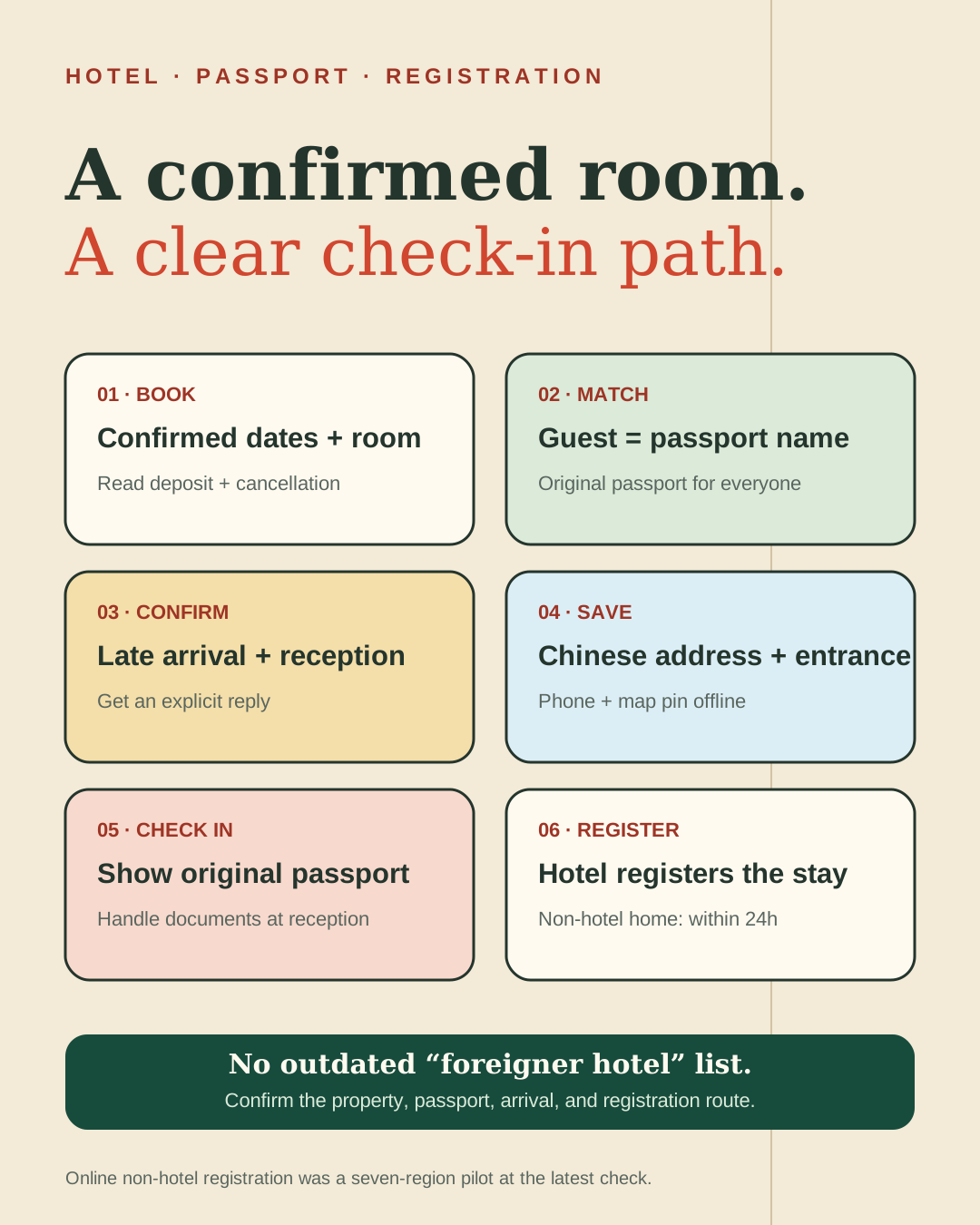
A paid hotel order is not the end of the setup. Before departure, make sure:
- The room and dates are confirmed.
- The guest name matches the passport.
- The hotel knows you will check in with a foreign passport.
- Reception will hold the room for a late arrival.
Hotels register foreign guests. A stay with a friend, in a private rental, or in another non-hotel home follows a different registration process.
1. Do not rely on an old “foreigner hotel” list
China’s 2024 accommodation measures say local authorities and booking platforms should not restrict operators from receiving foreign guests based on qualification requirements, and platforms and operators may not illegally advertise that they do not accept them.
That means the current rule should not be explained as “only approved foreigner hotels can host you.” In practice, a small property may still have staff, system, listing, or late-night check-in problems.
Bottom line: Confirm the actual property and arrival—not a permanent list of “foreigner hotels.”
2. Compare the booking, not just the brand
Trip.com is a practical multilingual booking option listed in China’s 2025 English guide, but this is not a government commercial endorsement or a paid recommendation. Booking.com, Agoda, Expedia, hotel websites, and direct booking may also work.
Compare confirmation status, room and guest count, passport-name entry, taxes and deposit, prepayment, breakfast, extra beds, children, cancellation, no-show rules, and support you can reach from China.
3. Match every guest to a passport
Enter the lead guest’s name as required from the passport, not a nickname or abbreviation. For several travelers, check the room’s occupancy and whether all foreign guests must be entered. Each person should carry their own valid original passport.
If the name is wrong, ask the platform or hotel to correct it before arrival and save the confirmation.
Bottom line: The payer can differ from the guest; the guest record must match the person and passport at reception.
4. Confirm when the stay has extra risk
Contact the property after booking if it is a small hotel, guesthouse, private rental, remote location, same-day booking, late-night arrival, or has unclear foreign-passport information.
Ask: “I will check in with a foreign passport. Is the booking confirmed, and will reception be open at [time]?” Request the Chinese property name, address, phone number, and correct entrance.
A chat screenshot records the conversation, but does not replace a confirmed order or original passport.
5. Bring the original documents
Carry every guest’s original passport, relevant visa or entry record, confirmed booking, platform support details, a working payment route, possible deposit, and the hotel’s Chinese address.
Reception may scan passport information to complete the legally required hotel registration. Handle this at the official front desk; do not send passport and payment details to an unknown private account.
Ask for the deposit amount, method, return timing, and receipt. Save a reversal or refund record at checkout.
6. Who registers a hotel stay?
National Immigration Administration guidance confirms that a hotel registers foreign guests under hotel public-security rules and submits the information to the local public-security authority.
You normally do not visit a police station again after normal hotel check-in. If you later need proof for an immigration or document process, ask the hotel for its available registration record. A new hotel handles the new stay; the first registration does not cover every later address.
7. Staying with friends or in a non-hotel home
For a residence other than a hotel, the foreign guest or host must complete accommodation registration with the local public-security authority within 24 hours of arrival.
From March 20, 2026, the NIA began an online-registration pilot in Hebei, Liaoning, Zhejiang, Hubei, Guangxi, Chongqing, and Sichuan, with gradual national expansion planned. Official online channels include the NIA government website, NIA 12367 app, NIA 12367 WeChat mini program, and Alipay mini program. Online and in-person registrations have the same legal effect in the pilot.
This was not nationwide at the latest check. If the location is outside the current service, online registration fails, or the situation is unclear, use the local exit-entry office or police station. Call 12367 for immigration and registration questions. For a first registration at an address, official guidance recommends help from the host who knows the property details.
Bottom line: A non-hotel stay still needs registration within 24 hours; check whether the current location supports the official online route.
8. Ask private rentals one extra question
A bookable apartment is not automatically registered as a hotel. Before paying, ask whether the operator is a hotel or non-hotel host, who completes foreign-guest registration, what host or property documents are required, and how self check-in and late arrival work.
“Nobody registers” is not official confirmation. If the host cannot explain the legal registration route, choose a property that can.
9. Protect a late-night arrival
Tell the hotel your flight and expected arrival, confirm 24-hour reception, get a clear promise that the room will be held, save the Chinese address and entrance, and keep platform support plus a safe backup property.
Update the hotel after a major delay. Flight landing time is not hotel arrival time.
If reception refuses or cannot find the order
First identify whether the issue is the date, confirmation, guest name, occupancy, passport-registration procedure, late staffing, or overbooking.
- Show the confirmed order, passport, and earlier messages.
- Ask for a manager or staff member familiar with foreign-passport registration.
- Contact the original booking platform for confirmation or replacement accommodation.
- Call NIA 12367 when the dispute is about accommodation registration policy.
- Late at night, secure a safe place to stay, preserve evidence, and handle refunds separately.
Never read passport, card, or SMS-code details aloud in public or let an unknown person take the passport away to “help.”
Final answer: You do not need an outdated list of “foreigner hotels.” You need a confirmed booking, correct passport name, clear arrival plan, and a valid registration route. Hotels register their guests; non-hotel stays require registration within 24 hours through the currently available local process.
Continue reading
- Your First Trip to China: The 72-Hour Checklist
- How to Get from a China Airport to Your First Hotel
- Essential Apps for Your First Trip to China
- How to Order Food Delivery in China as a Visitor
Sources checked for this update
- China Government / Xinhua, China to facilitate accommodation for foreign travelers, July 26, 2024
- China Government, Guide to Working and Living in China (2025), checked July 19, 2026
- National Immigration Administration, 2026 online accommodation-registration announcement and policy interpretation, March 21, 2026
- Shanghai Government accommodation-registration FAQs, checked July 19, 2026