Do not wait until you clear customs to research the first transfer. Save five things before departure:
- Arrival airport and terminal
- Hotel’s Chinese name, address, phone number, and map pin
- Main transport plan
- Backup if the last train or your phone fails
- Expected hotel arrival and reception hours
1. Confirm the airport and terminal
One city can have several airports, and one airport can have several terminals. Beijing Capital and Daxing are different airports; Shanghai Pudong and Hongqiao are different airports. Pickup zones, metro stations, and taxi ranks can also differ by terminal.
Check the full English and Chinese airport name, terminal, arrivals area, current airport transport page, and which airport is actually closest to your hotel.
Bottom line: Identify the airport and terminal before comparing time and price.
2. Choose one of four routes
Airport rail or metro
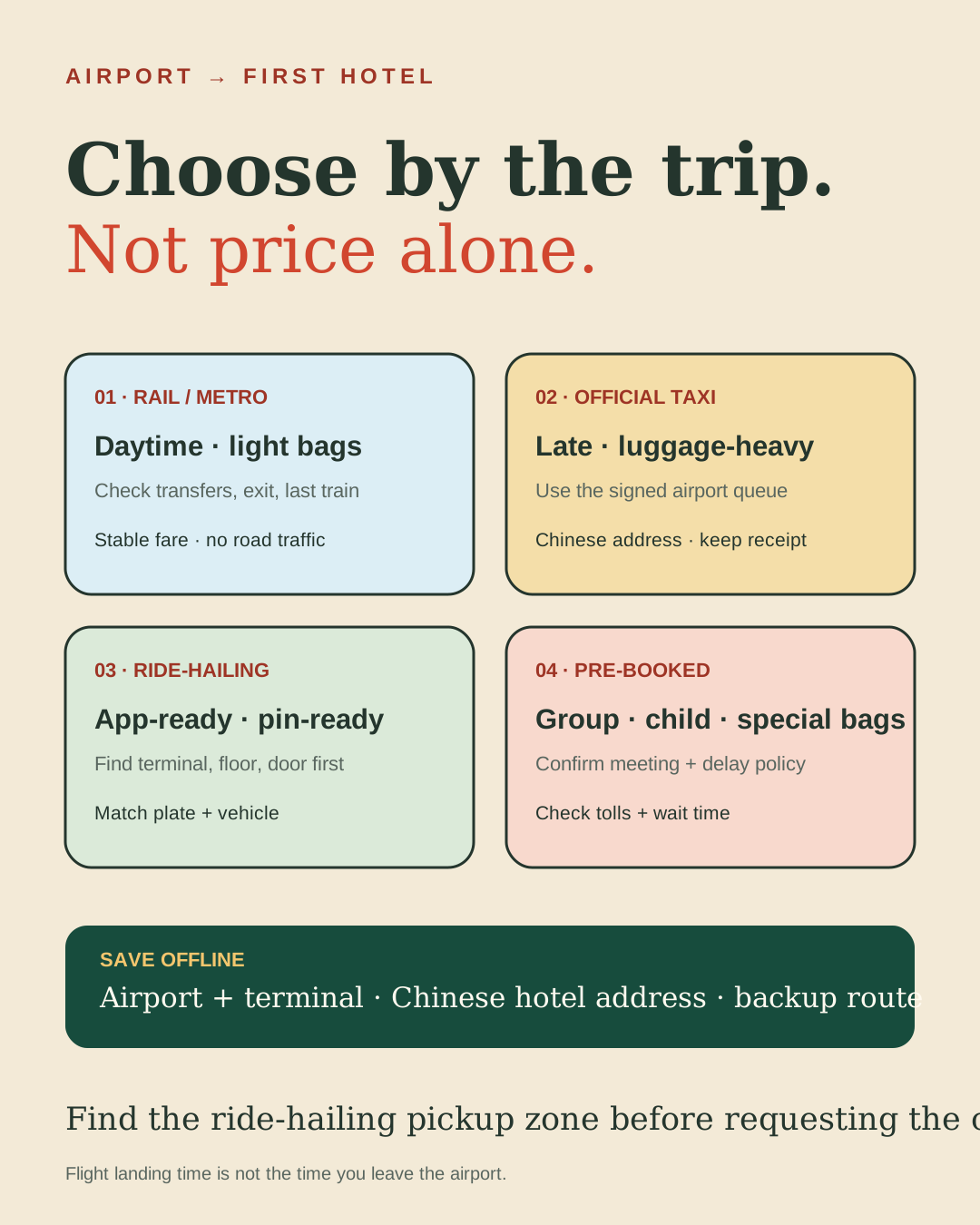
Best in daytime with manageable luggage and a hotel near a station. It offers clear fares and avoids road traffic, but may require transfers, long walks, and a final street-level walk. Check the complete airport-to-hotel route and exit in AMap, not just one airport line.
Official taxi
Best late at night, with several bags, or when you want door-to-door travel. Follow Taxi signs to the official queue. Ignore people soliciting rides inside arrivals.
Show the hotel’s Chinese address and pin. Use the local official metered or regulated fare process and keep the receipt or payment record. Tolls and night charges depend on current local rules; do not memorize an old fixed airport price.
Ride-hailing
Best when you are comfortable with an app and can find the designated pickup zone. Use DiDi Greater China or a current official ride entry in Alipay or WeChat.
Large airports may require a terminal, floor, door, parking area, or column number. Walk to the pickup zone before requesting the car. Match plate, vehicle, and driver; do not board when the details differ.
Hotel or pre-booked transfer
Best for groups, older travelers, children, special luggage, or very late arrivals. Confirm who operates the vehicle, meeting point, delay contact, wait time, vehicle size, included tolls and parking, and cancellation or no-show terms.
Bottom line: Rail for light daytime travel; official taxi for simple late or luggage-heavy travel; ride-hailing when you can manage the pickup pin; pre-booked transfer for groups and special needs.
3. Test the phone before leaving the terminal
Turn on roaming or your travel eSIM, then test a webpage, AMap, messaging, and one verification text. Open the Chinese hotel address and confirm one mobile payment method plus a small cash backup.
Airport Wi-Fi is temporary help, not a reliable plan for navigation, rides, and contacting the hotel.
4. Build a hotel address card
Keep these available offline:
- Chinese hotel name
- Chinese address
- hotel phone
- AMap pin
- correct entrance
- booking number
- 请按这个地址去,谢谢。 — Please go to this address, thank you.
An English brand name is not enough. A hotel inside a mall or apartment complex may have several entrances, so place the pin at the actual drop-off point.
5. Find a ride-hailing pickup without guessing
Airport roads may separate departures, arrivals, parking garages, and ride-hailing zones. The app may ask for a terminal, level, door, parking section, or column.
Find the signed area first, then request the car. If speaking by phone is difficult, use in-app messages and save: 我不会说中文,请在 App 里发消息。 — I do not speak Chinese. Please message me in the app.
The plate is more reliable than a driver waving at you.
6. Use the official taxi route
Queue only where airport signs direct you, show the Chinese address, keep control of your phone and payment password, and save the plate, time, and receipt. Those details also help if you leave something behind.
Do not accept an arrivals-hall offer for a “fixed cheap price,” “no queue,” or “inside channel.”
7. Protect a late arrival
Check the last rail departure using the time you will reach the station—not the flight’s scheduled landing. Include immigration, bags, customs, and walking.
Tell the hotel your likely arrival, confirm the room and reception will remain available, preserve phone battery, and keep both an official taxi route and another backup. After midnight, an executable safe route matters more than the lowest fare.
Do not connect an international flight too tightly to a train
Immigration, baggage, customs, travel to the railway station, and train security all take time. If same-day rail is unavoidable, check the exact airport and station, allow for a delayed flight, choose a changeable ticket, and keep a hotel backup.
Final answer: Confirm the airport, terminal, and Chinese hotel address first. Then choose transport based on arrival time, luggage, and your ability to find a pickup point. Every plan needs a late-night and phone-failure backup.
Continue reading
- Your First Trip to China: The 72-Hour Checklist
- How to Get Mobile Data in China
- How to Book a Hotel and Register Your Stay in China
- How to Ride the Metro in China as a First-Time Visitor
Sources checked for this update
- China Government, Guide to Working and Living in China (2025), checked July 20, 2026
- Current official transport pages for the major airports in Beijing, Shanghai, Guangzhou, and Shenzhen, checked July 20, 2026
- Current DiDi guidance for overseas numbers, international cards, pickup, and safety, checked July 20, 2026