Shenzhen sits on the eastern bank of the Pearl River estuary in southern Guangdong, directly beside Hong Kong and at the heart of the Greater Bay Area. Established as a city in 1979 and designated one of China’s first special economic zones in 1980, it is now a national economic center, an advanced manufacturing base, and one of the clearest windows onto China’s reform and opening.
Shenzhen is often introduced as a fishing village that became a technology metropolis almost overnight. The speed is real. The story is not.
Long before Shenzhen became a city in 1979 and a Special Economic Zone in 1980, this area already contained the old county center at Nantou, the coastal-defense settlement at Dapeng, Hakka communities, markets, villages, and a complicated border with Hong Kong.
The Special Economic Zone did not create local history from nothing. It reorganized land, work, movement, and expectation at extraordinary speed.
The most interesting way to meet Shenzhen, then, is not to ask whether it has enough ancient monuments or enough futuristic towers. Ask a more physical question:
How does something get made here—and what does the process reveal about the city?
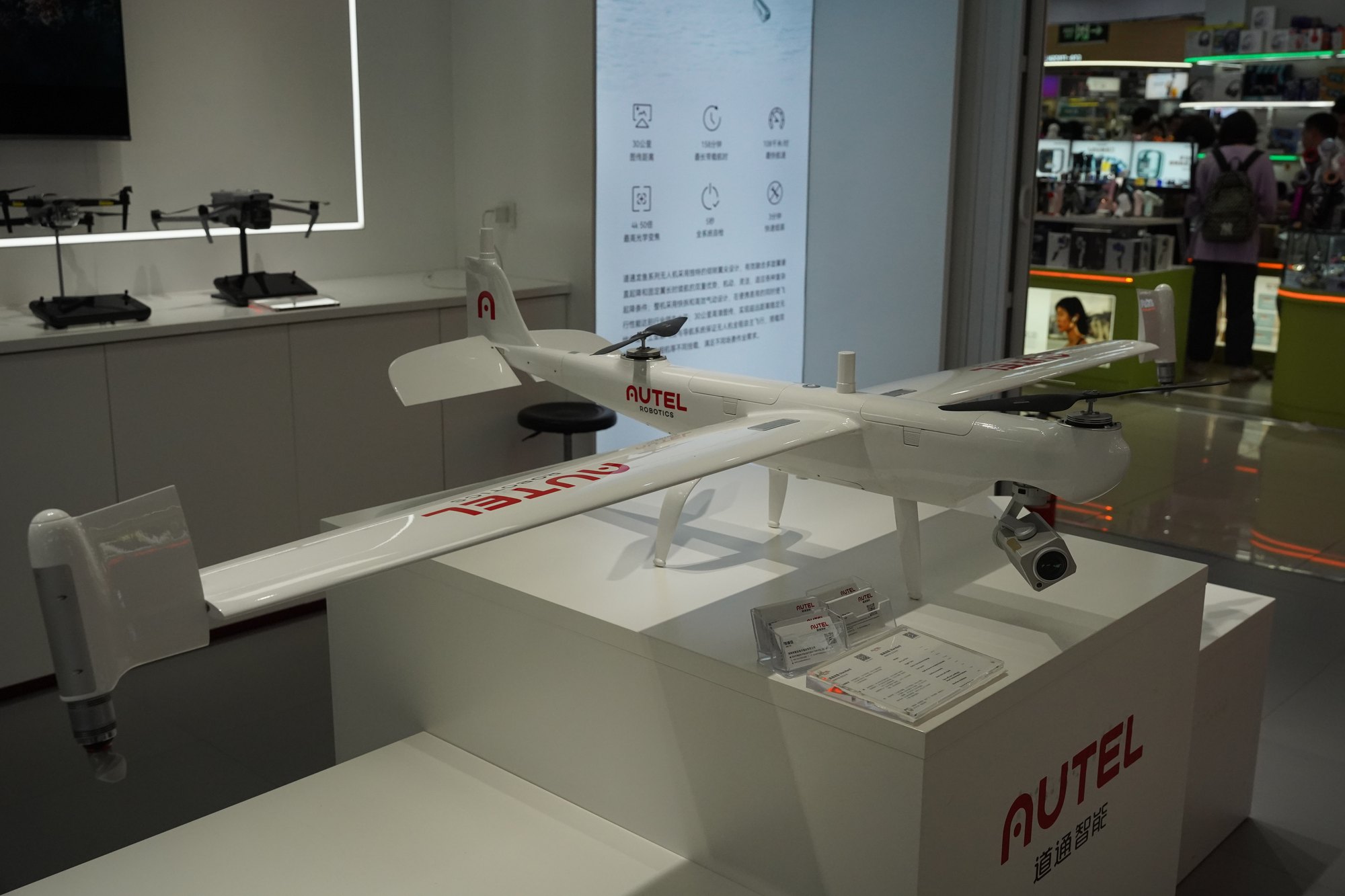
A product becomes a market in Huaqiangbei
An Iranian couple bought two digital cameras, a mini camera, a hair dryer, and a translation device in Huaqiangbei. When they could no longer carry everything, they did not end the shopping trip. They bought another suitcase on the spot.
In the same report, another visitor’s list read like a map of family ties and a small business: a toy car and backpack for his children, a curling iron for his wife, Bluetooth earphones for friends, and phones and a 3D rotating display for his shop. Other shoppers were looking for smart glasses, massage devices, or simply a small camera.
Those bags do not represent everyone who comes to Huaqiangbei, but they put faces to the market. Repair workers, wholesale buyers, product specialists, travelers shopping for relatives, and small-business owners can all enter the same few buildings. The point is not only that there are many electronics. One need can quickly split into different versions, prices, functions, and ways of supplying it.
Summer makes that response speed especially visible. In July 2026, a French visitor who had researched the trip before arriving made Huaqiang Electronic World her first stop in Shenzhen and bought a misting fan. Reports from the same period described vendors offering misting fans and cooling towels for seasonal visitors. A person feels the heat outside; several versions of a solution appear at the counter. Demand, products, and sales feedback sit unusually close together here.
Huaqiangbei is also entering travel itineraries. A report from Singapore’s The Straits Times interviewed a Spanish-speaking guide and a travel-company manager in Shenzhen: some clients ask for wholesale markets to be added to their trips, while others shop in Huaqiangbei independently. That does not mean every international visitor comes here, and two industry interviews are not a representative survey. They do show the district carrying two roles at once—a working market and an emerging visitor destination.
Shenzhen’s official English-language city-walk material calls Huaqiangbei “China’s No. 1 Electronics Street.” It describes a broader cultural district that leads in electronic technology while also expressing fashion, design, culture, and innovation. That positioning is more useful than the easy promise that Huaqiangbei is simply the world’s cheapest electronics market.
On the ground, the district is dense and specialized. A visitor may encounter finished devices, components, cables, tools, cameras, testing, repair, screens, buyers, packaging, and repeated versions of what looks like the same object. Some people experience it as a giant toy shop. Others leave with the impression of several buildings full of phone cases.
Both reactions can be true. Huaqiangbei is a working business environment, not a visitor attraction rearranged to explain itself. Being added to travel itineraries has not made it automatically easy to read.
For a first visit, choose one object or need and follow it. It might be a cable, a camera part, a repair need, a small tool, or a device you genuinely want to understand. Compare the versions, ask what can be tested, and notice whom the seller expects to buy it: a local repair worker, a wholesaler, a traveler, or a small merchant. Then check what will still matter after you leave the counter.
If you shop, write down the model, total price, and any important promise. Translation software can help a conversation, but it cannot confirm mobile-network compatibility, plugs and voltage, whether a companion app works in your country, warranty and return rules, or whether a battery-powered product can fly with you. Do not assume a walk-in retail price must be lower than a major online platform. Buy only what you can test and can afford to lose.
Huaqiangbei Museum can help before or after the street. Its role is not to be an air-conditioned extra stop; it explains how an industrial area became an electronics market and innovation district. Check its current opening, reservation, language, and photography information before visiting.
A painting becomes an order in Dafen
Dafen Oil Painting Village is not merely a colorful creative district. It developed around the production, copying, trading, and export of oil paintings, then added original artists, galleries, and a public art museum to that economic history.
The useful tension is visible in a small area. A familiar image can be copied repeatedly into a size, price, and delivery promise. Skilled painters, shop owners, canvases, buyers, and logistics turn a picture into an order. Nearby, original artists and the museum negotiate how this industrial past enters a different cultural future.
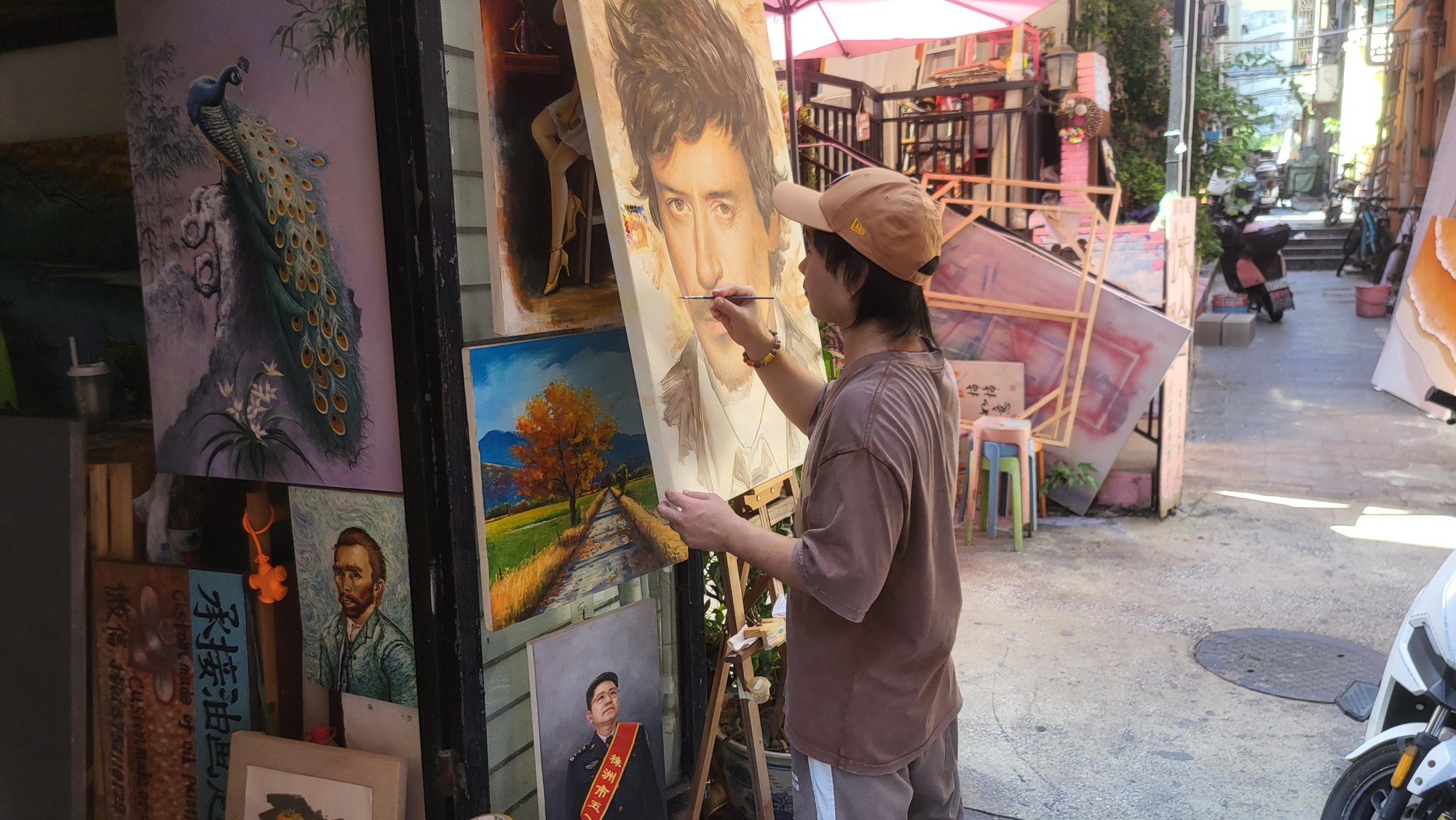
Dafen does not need a full day. For many first-time visitors, one or two focused hours are enough. The neighborhood is in Longgang, away from the central districts, so it makes more geographic sense to continue along Metro Line 3 toward Dongmen than to cross the city from Nantou or Shenzhen Bay just for a photograph.
Look for work rather than scenery: how paintings are displayed, priced, copied, altered, framed, stored, and discussed. Visit Dafen Art Museum when its current exhibition and opening make sense. The street shows the production system; the museum helps interpret how that system became part of Shenzhen’s public cultural story.
Nantou: where Shenzhen’s 1,700-year history begins
Shenzhen is often described as a technology city that grew almost overnight. Nantou pulls the timeline back nearly 1,700 years. Dongguan Commandery was established in this area in 331. The walled site still legible today was built as the Dongguan defensive garrison in 1394. In 1573, Nantou became the seat of Xin’an County, whose territory broadly included present-day Shenzhen and Hong Kong. This is not a Ming or Qing town sealed intact. It is an old county seat, an urban village, and a contemporary cultural district occupying the same ground.
The most useful things to see are not a list of new shops, but three groups of spaces that explain that history. The south gate and surviving wall remains show the defensive town facing the coast. The former Xin’an county-office site, Dongguan Guild Hall, and Maritime Defense Office site leave traces of county government, merchant connections, and coastal command. Along Zhongshan South Street and its side lanes, Qing-era houses, present-day homes, exhibition rooms, and shops show that the old town has not been sealed inside a museum.
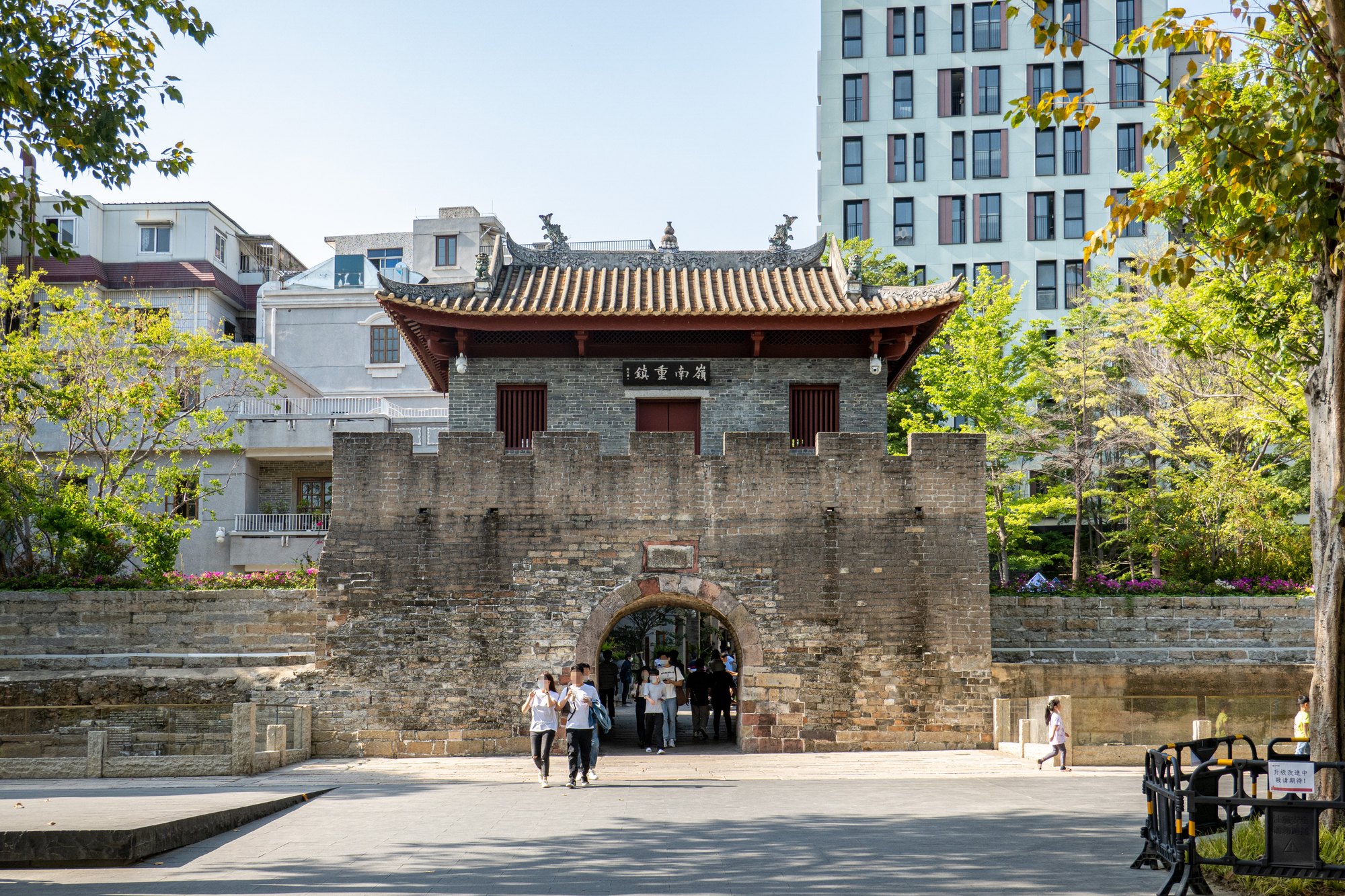
Begin with the historical exhibitions to separate three dates: the commandery history beginning in 331, the garrison town of 1394, and Xin’an County in 1573. Then enter through the south gate and walk the main street slowly enough to notice how historic remains sit inside a living neighborhood. Huaqiangbei shows how Shenzhen makes new products. Nantou shows that the city’s speed has always unfolded on land already shaped by government, trade, defense, and ordinary life.
New arrivals make city culture too
“Shenzhen has no local food” is a familiar judgment. It misses the city’s actual food history.
People arrived from Guangdong, Hainan, Hunan, Sichuan, the northeast, and many other places. They brought languages, recipes, ingredients, business networks, and habits of eating together. A dish associated with modern Shenzhen may be local not because every ingredient originated inside the city boundary, but because migration, port trade, entrepreneurship, and demand connected here.
Coconut chicken hotpot is one useful example. Local accounts connect its development in Shenzhen with Hainanese ingredients and people, the restaurant trade around the Wenjindu border crossing, customers moving through the city, and later popular consumption. The exact origin story is repeated in different forms, so treat it as a window into migration rather than a single uncontested invention claim.
The larger lesson is that a young migrant city does not lack culture while waiting to become old. Its culture can form through adaptation, argument, and repetition in real time.
Shenzhen Bay offers another version of that process. The waterfront is not important only as a skyline viewpoint. Walking, running, cycling, resting, looking toward Hong Kong, and sharing a public edge are ways a high-intensity working city makes ordinary time. Go toward the cooler part of the day. Summer heat and sun are serious, and holidays can make a popular waterfront feel very different.
Museums should answer one question each
Shenzhen has no shortage of exhibition spaces. A useful first trip does not collect them all.
- Use Shenzhen Museum’s history and folk-culture material to ask what existed before the Special Economic Zone and how different local societies entered the contemporary city.
- Use a reform-and-opening or urban-planning exhibition to ask how policy, population, land, infrastructure, and building changed the urban form.
- Use Huaqiangbei Museum to ask how an industrial area became an electronics district.
- Use Dafen Art Museum to ask how a production economy entered original art and public culture.
- Use Dapeng’s museum to ask how coastal defense connects to the city’s longer history.
The museum gives the question a history. The street shows what that history became. One should not replace the other.
Build three days around three kinds of making
Shenzhen is wide. A route that draws one arrow through distant districts can hide forty minutes or more of transit.
Day one: a product and a Special Economic Zone. Pair Huaqiangbei Museum with a focused walk through the electronics district. Then change areas by metro for a reform-and-opening or city-planning exhibition and the civic landscape around Lianhuashan and the Civic Center. The morning stays at the scale of an object; the afternoon pulls back to the scale of a city.
Day two: an old county seat, migration, and a new waterfront. Enter Nantou through the south gate. Use its historical exhibitions to distinguish the commandery history beginning in 331, the garrison town of 1394, and Xin’an County in 1573, then follow Zhongshan South Street to see how the remains sit inside today’s neighborhood. Have one meal that can speak honestly about migration into Shenzhen rather than chasing a top-ten food list. Then take the metro or a car to Shenzhen Bay near sunset. Nantou and the waterfront are two different walkable areas with a transfer between them.
Day three A: craft, orders, and urban consumption. Give Dafen one or two hours, including the museum when open, then use Metro Line 3 to continue toward Dongmen. Do not travel to Dafen only to collect bright walls; look for the relationship between skilled work, copying, original work, price, and demand.
Day three B: coastal defense and the eastern shore. Replace day three A with a full day at Dapeng Fortress, its museum, and a weather-appropriate section of the coast. Do not append it to a central-city itinerary.
What not to ask Shenzhen to pretend
Shenzhen does not need to imitate Beijing’s monument density or Guangzhou’s long concentration of old-city heritage.
It also does not need to pretend that every electronics counter is a startup laboratory, every renewed block is authentic preservation, every park is therapeutic, or every piece of new technology is available to a visitor on demand.
The city’s strongest invitation is more specific. In a relatively short journey, you can see a device divided into choices, a painting converted into an order, nearly 1,700 years of county history embedded in a present-day neighborhood, and newcomers turning adaptation into city life.
Shenzhen is not compelling because it has completed the future. It is compelling because the joins are still visible.
Continue reading
- Open the Shenzhen City Desk
- How to Ride the Metro in China
- At the Chinese Table: A First-Time Visitor’s Guide
- How to Book Attraction and Museum Tickets in China
Sources checked for this update
- Shenzhen Government Online, Shenzhen Basics, including the city’s location, 1979 establishment, 1980 special economic zone designation, and current public positioning, checked August 6, 2026
- Shenzhen Municipal Government English portal, Cyber Shenzhen, including the public positioning of Huaqiangbei and the five official city-walk themes, checked August 1, 2026
- Shenzhen Municipal Culture, Radio, Television, Tourism and Sports Bureau materials on nationally protected cultural-heritage units and museum roles
- Shenzhen Government Online and Shenzhen Archives materials on Xin’an County, including the commandery history beginning in 331, the Dongguan defensive garrison established in 1394, the Xin’an county seat established in 1573, and the 1914 renaming to Bao’an County
- Shenzhen Government Online’s English visitor page for Nantou’s south gate, wall remains, Dongguan Guild Hall, Maritime Defense Office site, and Qing-era houses
- Official planning and cultural materials on Nantou’s protection, history, and renewal
- Official museum materials for Huaqiangbei, Dafen, Shenzhen history and folk culture, and Dapeng
- Public English-language travel discussions and local community discussions from 2024–2026, used only to identify recurring experience gaps and not as representative statistics
- Xiamen Media Group, International summer visitors flock to Shenzhen’s Huaqiangbei to shop, video page published July 17, 2026
- CCTV Finance, reporting on international visitors’ purchases in Huaqiangbei, published January 3–4, 2026
- Kok Yufeng, The Straits Times, July 23, 2026, consulted through Ding Ding’s attributed Chinese translation on Huanqiu
Reported figures for monthly store traffic, average daily international visitors, and AI-glasses export growth are not used in the article because the available pages do not provide compatible definitions, market boundaries, deduplication methods, product scope, or links to the primary data.
Photos on this page
- Huaqiangbei UAV display: Benlisquare, CC BY-SA 4.0, via Wikimedia Commons
- Dafen painter: Renek78, CC0, via Wikimedia Commons
- Nantou south gate: Iswzo, CC BY-SA 4.0, via Wikimedia Commons


