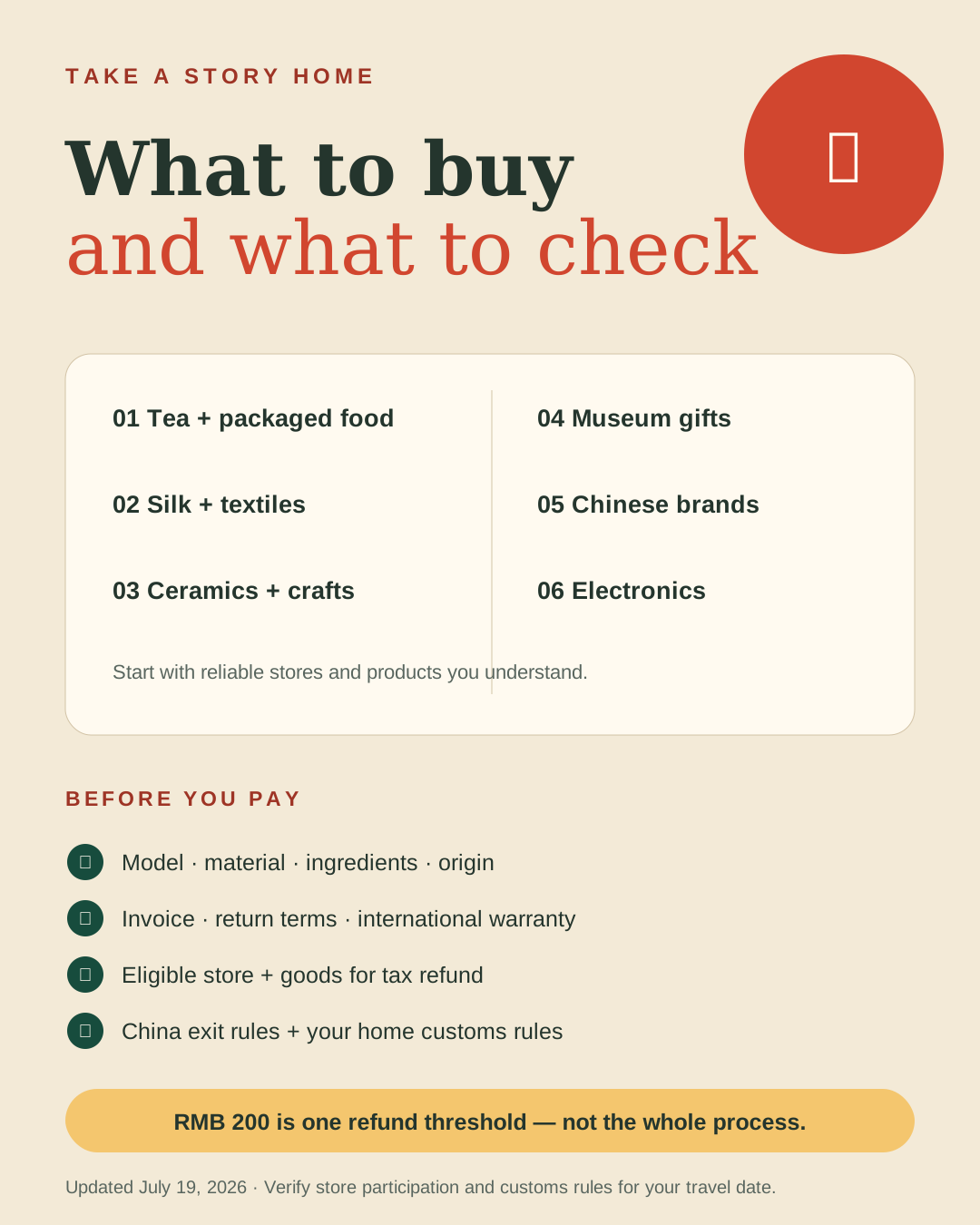
Shopping in China is not limited to international luxury stores. A first-time visitor can start with six useful categories:
- Tea and regional packaged food
- Silk, textiles, and clothing
- Ceramics, crafts, and intangible-cultural-heritage products
- Stationery, calligraphy supplies, and museum gifts
- Chinese fashion, beauty, and lifestyle brands
- Smart devices, photography gear, and consumer electronics
Choose what you want first: a simple souvenir, a Chinese brand you will use, luxury service, or a possible electronics price advantage. Each goal belongs in a different kind of store.
Tea and food: check the label before the story
Tea makes a good gift, but origin, grade, and price vary widely. Look for the product name, origin, production date, shelf life, storage instructions, sealed packaging, ingredients, and a receipt.
Do not raise your budget simply because a seller says “ancient tree,” “master,” or “special supply.” Start with a small pack from a regular store with clear labels and fixed prices.
Meat, seeds, fresh fruit, traditional medicines, and foods with plant or animal ingredients may be restricted by your destination country. Legal sale in China does not guarantee legal entry at home.
Silk, ceramics, and crafts: know what you are buying
Silk, embroidery, ceramics, lacquerware, paper cutting, cloisonne, and regional crafts range from everyday gifts to collectible work.
Ask about material, production method, maker, origin, packaging, and damage or return terms. Something that looks old is not automatically an antique or valuable. Before buying possible antiquities, fossils, wildlife products, or protected materials, check Chinese export rules and your destination’s import rules.
Bottom line: Buy ordinary gifts for beauty and usefulness. Buy collectibles only with provenance and permission to take them home.
Museum gifts: an easy first stop
Official museum and cultural-venue shops are a low-friction place to find stationery, magnets, jewelry, scarves, seals, puzzles, art reproductions, and seasonal products.
Prices and themes are usually clear, products fit into luggage, and the cultural story is easier to understand. Do not assume an unofficial shop using a museum logo sells the same product as the venue itself.
Chinese fashion, beauty, and lifestyle brands
Contemporary Chinese clothing, outdoor gear, cosmetics, fragrance, homeware, tea ware, toys, collectibles, and stationery show a different side of the country from traditional souvenirs.
For beauty products, check ingredients, shade, size, expiry, and flight rules. Try on clothing and ask about the return window; returning an item from another country is rarely simple. For limited collectibles, use a brand store, authorized shop, or established retailer when authenticity and support matter.
Electronics: the region version matters
China’s hardware ecosystem, especially in Shenzhen, attracts international shoppers. The same-looking product can have different regional versions.
Check:
- exact model and serial number
- language, app-store, and region restrictions
- mobile bands, SIM/eSIM, and carrier compatibility
- plug, voltage, and charging standard
- warranty coverage in your country
- battery and power-bank flight rules
- packaging, invoice, and return requirements
For phones, drones, cameras, computers, and expensive accessories, use an official brand store or authorized dealer. “Works everywhere” is not enough without written model and warranty details.
Luxury shopping: ask four questions early
In Beijing, Shanghai, Guangzhou, and Shenzhen, high-end shoppers can contact a brand store before visiting. Ask about stock, payment, departure tax refund, and after-sales support.
Bring your original passport, confirm card and mobile-payment limits, and keep the invoice, refund form, warranty, and packaging. Store participation, inventory, and opening hours change, so verify them for the actual visit date.
Choose the store for the job
- Malls and brand stores: more predictable for luxury, Chinese brands, beauty, and electronics.
- Museum and cultural shops: strong for well-explained gifts and crafts.
- Historic streets and specialty markets: good for discovery, with more variation in quality and price.
- Wholesale and electronics markets: best for shoppers who can verify models and quality themselves.
A formal mall buys certainty; a cultural venue buys context; a market buys exploration. None is automatically best for every purchase.
China departure tax refund: the current basics
China updated its departure tax-refund policy in 2025. An eligible overseas visitor may apply after spending at least RMB 200 at the same participating store on the same day, provided the purchase and traveler meet the other conditions.
Current official guidance also says:
- refunds may be paid through mobile payment, bank card, or cash
- the cash-refund cap is RMB 20,000
- refund-upon-purchase is expanding but is not available in every store
- receiving an advance refund does not remove exit customs verification
Use this order:
- Look for the departure tax-refund store sign.
- Ask whether the product qualifies before paying.
- Show your passport and collect the invoice, refund form, and required documents.
- Keep the goods and packaging ready for customs inspection.
- Arrive early enough at the departure point for customs and refund processing.
- For refund-upon-purchase, follow the store’s guarantee or pre-authorization rules and carry the goods out on time.
The refund is not necessarily the full VAT shown in a headline. Product tax rate and service fees affect the final amount.
Bottom line: RMB 200 is only one threshold. Store, goods, passport, documents, and exit verification all matter.
Returns, warranties, and authenticity
Ask about the return period, unopened-item rules, and handling location before paying. Keep invoices, payment records, packaging, serial numbers, and warranty cards.
A “national warranty” does not necessarily mean a global warranty. Inspect expensive goods in the store. If the price or promise is unclear, stop before paying; do not let “last one” pressure replace verification. Never carry a sealed package out of the country for a stranger.
Your home customs rules are separate
A legal purchase or Chinese tax refund does not automatically exempt the item from declaration or tax at your destination.
Check your destination’s allowance and restrictions for luxury goods, food, tea, traditional medicine, plants, animals, alcohol, tobacco, liquids, batteries, electronics, art, protected materials, and commercial quantities. Declare when required and keep the receipt.
The one-minute shopping check
- Buy expensive goods from an official or authorized source.
- Confirm model, material, ingredients, size, or origin.
- Keep the invoice, return terms, and warranty.
- For a refund, verify both the store and product.
- Carry the passport, goods, and refund papers to exit customs.
- Check your destination country’s import rules.
- Plan safe transport for fragile goods, liquids, batteries, and valuables.
Final answer: Start with Chinese brands, museum gifts, crafts, and city souvenirs from reliable channels. For expensive purchases, check the exact model, warranty, refund, and customs route. A tax refund can reduce cost; it does not replace proof of purchase or border checks.
Continue reading
- Your First Trip to China: The 72-Hour Checklist
- How to Pay in China: 4 Things to Set Up Before Your Trip
- Payment Not Working in China? Fix It at the Checkout First
- How to Order Food Delivery in China as a Visitor
Sources checked for this update
- China Government / Xinhua, China refines departure tax refund policy to encourage inbound consumption, April 27, 2025
- Xinhua, China steps up policy support to facilitate travel, shopping for overseas visitors, April 28, 2025
- State Taxation Administration, Upgraded Tax Refund Policy Makes “Shopping in China” Easier, updated June 5, 2026; checked September 10, 2026
- State Taxation Administration, What is the process of the Refund-upon-departure?, including invoices, passport or other valid ID, customs verification, and the port refund agency; rechecked September 10, 2026
- State Taxation Administration, What is the process of the Refund-Upon-Purchase?, including pre-authorization, customs verification, and recovery of an ineligible advance refund; rechecked September 10, 2026