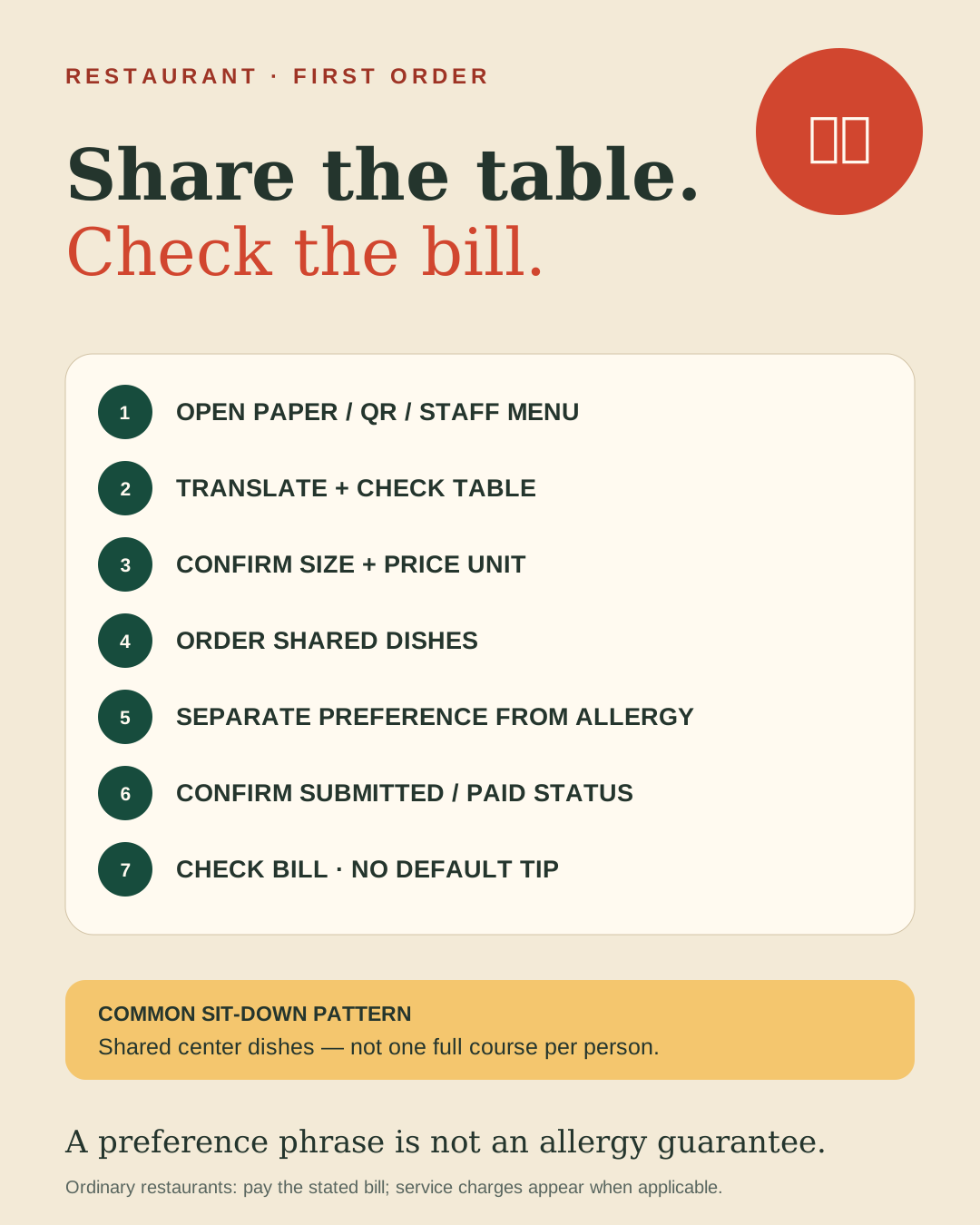
Before ordering, solve four things: how the menu opens, what one portion means, how to communicate a preference or serious allergy, and whether the order is submitted and paid.
Two useful cultural defaults: many Chinese sit-down meals place shared dishes in the middle rather than serving each person a separate appetizer, main, and side; ordinary restaurants also do not have a general tipping custom. Fast food, noodles, set meals, and some hot pots may be individual.
1. The menu may be paper, QR, or staff-led
Ask for a paper, picture, or English menu. For a QR menu, make sure the code belongs to the restaurant and current table, then check the venue name and table number. Current WeChat and Alipay versions offer mini-program translation, although placement and quality vary.
When ordering directly with staff, show the Chinese dish name or picture and ask them to repeat items and quantities. Translation helps you read; staff must confirm the actual size, option, and order.
2. If the QR menu will not open
Check data, app login, mini-program translation, and table number. Then ask for a paper menu or direct staff order. A QR code is not the only valid route.
Do not install an unknown app or share a payment password or SMS code to order one meal.
3. Check six things on every menu
- dish and main ingredients
- portion size
- price unit
- spice, sweetness, temperature, or cooking method
- required additions, staple food, or soup base
- tea, tableware, room, service, or base charges
Seafood, live fish, and some meat may be priced by weight. Ask for the estimated total when you see a market price or a per-100g / per-500g unit. Set meals, hot pot, and barbecue can also have minimum portions or per-person fees.
Bottom line: Confirm unit, portion, and extra charges before submitting.
4. Shared dishes are the common sit-down pattern
At many Chinese sit-down meals, the group chooses dishes together and shares from the center, while each person has a bowl, plate, and chopsticks. It is not the default Western pattern of a separate full course for each diner.
Fast food, noodles, rice bowls, personal sets, and some hot pots are different. Shared does not mean every dish is the same size, so begin with fewer dishes and add more later. Ask 这个菜适合几个人? — How many people is this dish for?
Rice, noodles, or other staple food may need to be ordered separately.
5. Use short phrases for preferences
- 不要辣。 No spice.
- 少辣。 Less spicy.
- 不要香菜。 No cilantro.
- 不要葱。 No scallion.
- 少盐。 Less salt.
- 不需要一次性餐具。 No disposable cutlery.
These communicate preferences, not allergy safety. Sauces, stocks, oils, and prepared ingredients may still contain the item.
6. Treat a serious allergy as a safety decision
If a trace amount can cause a serious reaction, prepare a professionally checked bilingual allergy card. State the ingredient, severity, and cross-contact risk; ask a responsible staff member or manager before sitting down; avoid unclear stocks, sauces, seasoning powders, oils, and shared cookware; and carry medication according to medical advice.
“I do not eat it,” a religious restriction, and a medical allergy are not the same. “Vegetarian” does not automatically prove that a dish has no egg, dairy, animal fat, meat stock, oyster sauce, fish sauce, or shared cookware.
If the restaurant cannot confirm safety, choose another place or clearly labeled packaged food.
7. Confirm that the order is really submitted
Check venue, table, dish, option, quantity, spice note, estimated total, and whether payment has happened. In a QR menu, “in cart,” “submitted,” “paid,” and “accepted by kitchen” are different states. Avoid duplicate ordering when several people scan the same table code.
8. Check the bill and pay
Some restaurants charge during QR ordering; others take payment at the cashier afterward. Review dishes, quantities, tea, tableware, soup base, room or service charge, discount, final CNY amount, and merchant.
Use an accepted Alipay, WeChat, cash, or bank-card route. If mobile payment fails, switch method rather than handing your unlocked phone to a stranger.
Tipping
Ordinary mainland Chinese restaurants do not have a general expectation that you add a tip beyond the bill. Pay the stated total.
A hotel, high-end restaurant, private room, or special service may show a service charge on the bill. Read the bill; a listed service charge does not automatically mean another tip is required, and “no tipping” should not be applied blindly to every international or luxury setting.
Final answer: QR codes are only one way to open a menu. Confirm the table, portion, price unit, shared-dish pattern, and final bill. Use short phrases for preferences; for a serious allergy, require clear understanding and leave when safety cannot be confirmed. At an ordinary restaurant, pay the bill without adding a default tip.
Continue reading
- Essential Apps for Your First Trip to China
- How to Order Food Delivery in China as a Visitor
- Payment Not Working in China? Fix It at the Checkout First
Sources checked for this update
- Shanghai City News Service, Your guide to WeChat & Alipay mini-program translation tools, June 4, 2025
- China Government, Guide to Working and Living in China (2025), checked July 20, 2026
- Public food-safety guidance from Chinese market regulators, checked July 20, 2026; this guide does not provide individual medical advice